
As we transition from the mild February breeze into the intensifying Arizona spring, the looming threat of the “Heat Dome” becomes a primary concern for every Valley driver. Investing in ceramic window tint Phoenix is no longer just about aesthetic preference; it is a critical strategic decision for vehicle longevity and passenger health. With 2026 temperatures projected to break historical records, standard window films are simply insufficient for the modern executive’s commute.
The Evolution of Heat Rejection Film in 2026
Consequently, the technology behind window protection has shifted from simple aesthetics to high-performance climate control. Traditional dyed films of the past decade only provide a visual darkening effect without addressing the primary source of discomfort: Infrared (IR) radiation.
- Nano-Ceramic Technology: Unlike metallic films, modern 3M Ceramic IR films use non-conductive ceramic particles to block heat without interfering with 5G, GPS, or autonomous driving sensors.
- Total Solar Energy Rejection (TSER): While old films focused on VLT (Visual Light Transmission), 2026 standards prioritize TSER, which measures the film’s ability to deflect the entire solar spectrum.
- Durability: 3M’s advanced construction ensures that the film will not turn purple or bubble, even after years of exposure to the relentless Phoenix UV index.
Furthermore, as a 3M Pro Shop Dealer with over 20 years of experience, Jomar Wraps has seen the direct impact of high-rejection films on vehicle resale value and interior preservation.
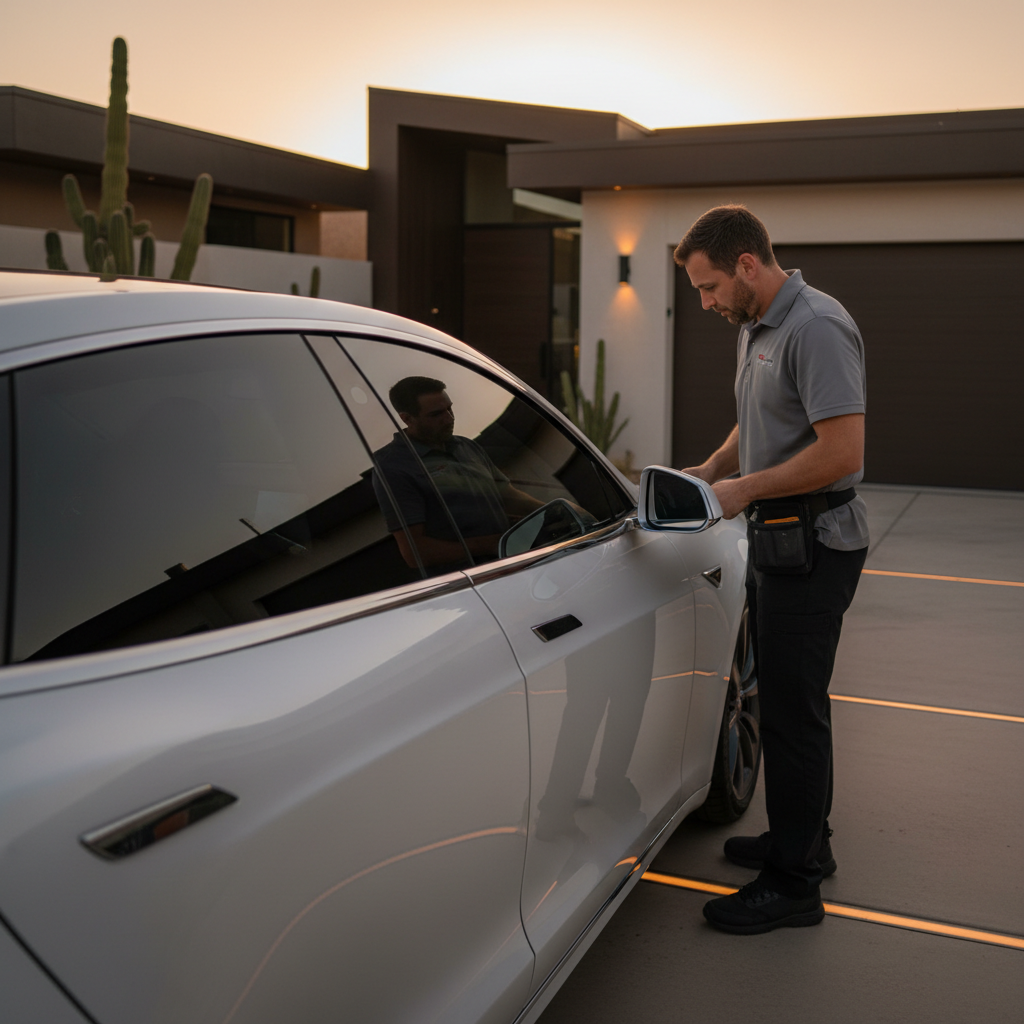
Why Ceramic Window Tint Phoenix is Vital for EV Range Efficiency
Specifically for Tesla, Lucid, and Rivian owners, the relationship between thermal management and battery performance is undeniable. In a Phoenix summer, your HVAC system can consume up to 25% of your total battery capacity just to maintain a tolerable cabin temperature.
- Reduced Pull-Down Time: Ceramic films allow the cabin to reach your set temperature significantly faster, reducing the initial high-load energy draw.
- Lower Sustained Energy Use: By blocking up to 95% of IR rays, the AC compressor works less frequently to maintain the setpoint.
- Extended Battery Life: Lower thermal stress on the interior components and the battery cooling system contributes to better long-term health for your EV’s powertrain.
According to research from the U.S. Department of Energy, heat gain through windows is a leading cause of cooling inefficiency. For Phoenix drivers, this translates directly into more miles per charge.
Technical Comparison: Standard vs. 3M Ceramic IR
Moreover, understanding the data is crucial for CMOs and fleet managers looking to optimize their mobile assets. The following table illustrates the performance gap between entry-level films and the premium solutions we provide at Jomar Wraps.
| Feature | Standard Dyed Film | 3M Ceramic IR Series |
|---|---|---|
| Infrared (IR) Rejection | < 20% | Up to 95% | UV Rejection | 90% | 99.9% | Signal Interference | Low | Zero (Nano-Ceramic) | TSER Performance | Moderate | Exceptional |
Choosing the best window tint for Arizona heat requires looking beyond the price tag to the long-term ROI in fuel savings and skin protection. You can explore our specific 3M product specifications to see which shade matches your lifestyle.
The Invisible Shield: Clear Ceramic for Windshields
Interestingly, one of the biggest trends in 2026 is the application of high-rejection clear films on windshields. Since the windshield is the largest piece of glass on your vehicle, it acts as a massive thermal gateway.
- Optical Clarity: 3M Crystalline and Ceramic IR options offer maximum heat rejection without darkening the glass, maintaining perfect visibility for night driving.
- HUD Compatibility: Our certified installers ensure that the film does not cause ghosting or distortion on your Head-Up Display (HUD).
- Dashboard Protection: Prevent the common Phoenix “cracked dash” syndrome by blocking the UV rays that degrade plastics and leather over time.
By integrating this “invisible shield,” you achieve a cooler cabin without altering the factory look of your luxury vehicle. This is a favorite among our luxury car customization clients who value performance over a “limo tint” aesthetic.
Dermatological Benefits and Driver Health
Beyond the vehicle’s mechanics, the human element is paramount. A daily commute in the Phoenix sun without ceramic window tint Phoenix is equivalent to hours of cumulative sun damage. High-quality 3M films provide a Sun Protection Factor (SPF) of over 1000.
- Skin Cancer Prevention: Blocking 99.9% of harmful UV-A and UV-B rays significantly reduces the risk of skin damage during long drives.
- Reduced Glare: Advanced films reduce the blinding glare from the Arizona sun, decreasing eye strain and driver fatigue.
- Safety: In the event of an accident, the film helps hold shattered glass together, protecting occupants from flying shards.
Organizations like The Skin Cancer Foundation recommend window film as part of a comprehensive sun protection regimen.
Fleet Management and Commercial ROI
For businesses with $1M+ in revenue, managing a fleet in Phoenix requires a focus on operational efficiency. Applying heat rejection film to your service vehicles isn’t just a perk for drivers—it’s a bottom-line strategy.
Specifically, fleet managers see a reduction in vehicle downtime caused by AC system failures. When the interior temperature is regulated, the mechanical load on the engine or battery is stabilized. This leads to fewer repairs and higher driver retention in the extreme summer months. Many of our clients combine this with commercial fleet graphics to ensure their brand looks as cool as the driver feels.
Why Jomar Wraps is the Trusted Choice in Phoenix
Ultimately, the quality of the film is only as good as the installation. As a 3M Pro Shop Dealer with 20+ years of experience, we provide a level of craftsmanship that generic shops cannot match.
- 3M Preferred Installers: Our team holds certifications across multiple specialties, including Fleet Graphics and Paint Protection Film (PPF).
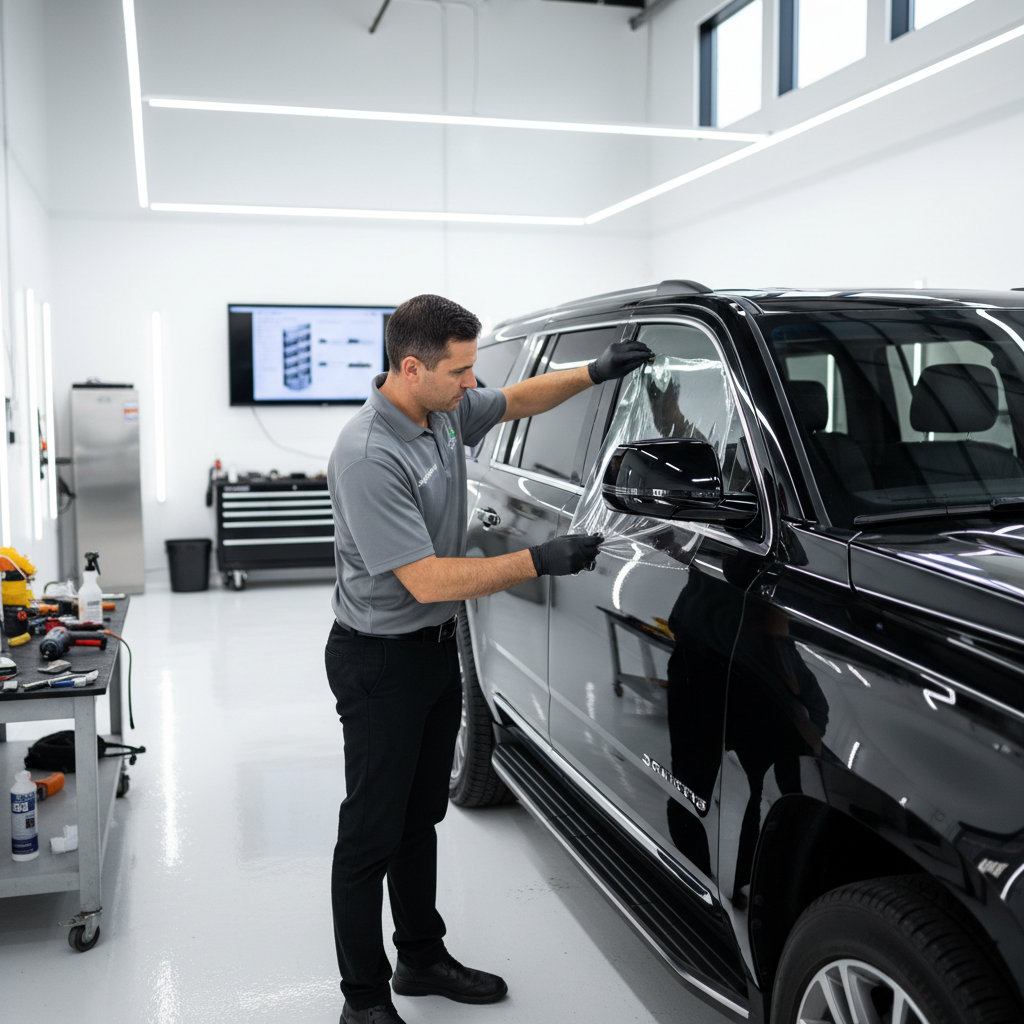
- Climate-Controlled Facility: We perform all installations in a dust-free, temperature-controlled environment to ensure a flawless finish.
- Lifetime Warranty: Every 3M window tint installation is backed by a nationwide limited lifetime warranty against peeling, bubbling, or blistering.
If you are ready to protect your investment and survive the 2026 heat dome, contact us at 602-243-5000 or visit our shop for a custom quote.
Frequently Asked Questions
How does ceramic window tint Phoenix differ from standard carbon tint?
While carbon tint is better than dyed film, ceramic tint is the gold standard for 2026. It uses nano-ceramic particles to block up to 95% of infrared heat, whereas carbon typically stops only 50-60%. This makes a massive difference in a 115°F Phoenix summer, especially regarding AC efficiency and passenger comfort.
Will ceramic tint interfere with my Tesla’s Autopilot or 5G signal?
No, 3M Ceramic IR films are non-metallized. This means they are completely signal-friendly and will not interfere with GPS, mobile data, or the complex sensor arrays used by modern EVs and luxury vehicles. This is why it is the preferred choice for high-tech vehicle owners.
Is it legal to tint the windshield in Arizona?
Arizona law allows for non-reflective tint above the manufacturer’s AS-1 line. However, many drivers opt for a clear ceramic film (like 3M Crystalline or Ceramic IR 70/80) across the entire windshield. This remains virtually invisible while providing massive heat rejection, though we always recommend checking the latest local regulations.
How long does the installation process take at Jomar Wraps?
A full professional installation typically takes 3 to 5 hours, depending on the vehicle type and the complexity of the windows. We recommend dropping your vehicle off at our Phoenix facility to ensure the film has proper time to bond in our climate-controlled environment before hitting the road.