
For Tesla owners navigating a 115°F July afternoon in the Valley, ceramic window tint Phoenix isn’t just a luxury—it is a critical performance upgrade. While the panoramic glass roof offers stunning views of the Camelback Mountains, it also acts as a massive solar collector, turning your cabin into an oven and draining your battery via the HVAC system.
Consequently, many owners find that standard factory glass isn’t enough to combat the intense Arizona solar radiation. At Jomar Wraps, with over 20 years of experience as a 3M Pro Shop Dealer, we have seen how the wrong film can fail under our unique desert conditions. This guide breaks down the data-driven reasons why high-performance ceramic technology is the only logical choice for your EV.
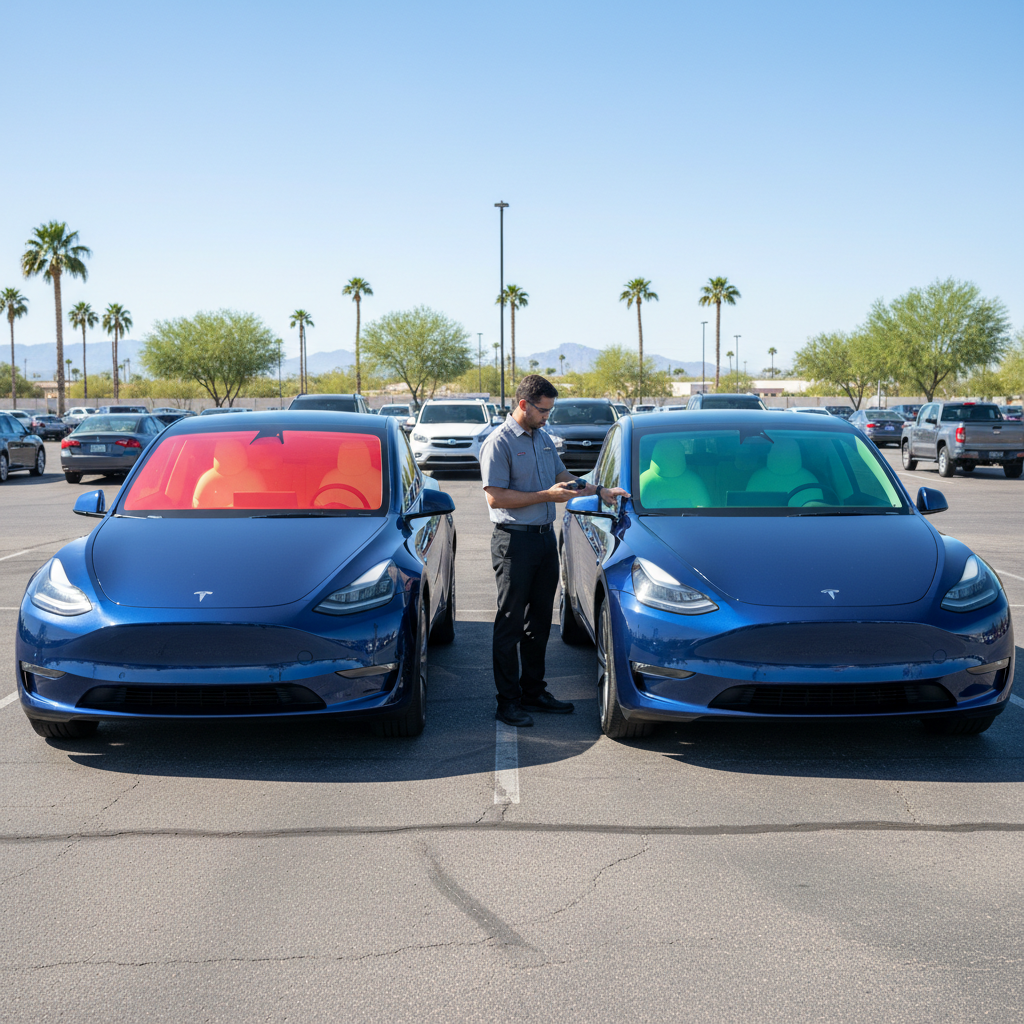
Why Ceramic Window Tint Phoenix is Essential for Tesla Glass Roofs
The engineering behind Tesla’s glass is impressive, but it lacks the specialized infrared rejection needed for the Sonoran Desert. Specifically, standard dyed films only darken the glass without addressing the primary source of heat: infrared light.
- Infrared Heat Rejection: High-end ceramic films like 3M Ceramic IR series reject up to 95% of infrared rays.
- UV Protection: Ceramic films block 99.9% of harmful UV-A and UV-B rays, protecting both your skin and the vegan leather interior.
- Signal Clarity: Unlike metallic films, ceramic does not interfere with GPS, Bluetooth, or Autopilot sensors.
- Durability: 3M ceramic films are designed not to purple or bubble, even after years of exposure to the Phoenix sun.
Furthermore, the ‘scorched scalp’ effect is a real phenomenon for taller drivers in Model 3 and Model Y vehicles. By installing a premium ceramic layer, you create a thermal barrier that significantly lowers the interior surface temperature of the glass roof.
3M Ceramic IR vs Standard Tint: The ROI of Heat Rejection
When comparing 3M Ceramic IR vs standard tint, the difference in Total Solar Energy Rejection (TSER) is staggering. Standard dyed films often rely on carbon or pigment to absorb heat, which eventually radiates back into the vehicle cabin once the glass reaches its saturation point.
In contrast, 3M’s nano-ceramic technology uses specialized ceramic particles to reflect heat away from the vehicle. According to 3M’s technical specifications, the Ceramic IR series provides superior clarity while maintaining a high heat-rejection profile across all shades.
Key Metrics for Performance Evaluation
- TSER (Total Solar Energy Rejection): The percentage of total solar energy (UV + Visible + IR) that is rejected.
- IRER (Infrared Energy Rejection): Specifically measures the heat you feel on your skin.
- VLT (Visible Light Transmission): How dark the tint appears; ceramic allows for high TSER even in lighter shades.
| Feature | Standard Dyed Film | 3M Ceramic IR Series |
|---|---|---|
| Infrared Rejection | Approx. 15-20% | Up to 95% |
| UV Protection | 90-95% | 99.9% |
| Clarity | Varies (can be hazy) | Crystal Clear Nano-Tech |
| Warranty | Limited 1-3 Years | Limited Lifetime (3M Pro Shop) |
Maximizing Tesla Heat Rejection and EV Range Efficiency
One of the most overlooked benefits of Tesla heat rejection is the direct impact on your vehicle’s range. During a Phoenix summer, your Tesla’s HVAC system can consume up to 15-20% of your battery life just to maintain a cabin temperature of 72°F.
By reducing the ambient cabin temperature, you allow the heat pump to operate at a lower duty cycle. This efficiency gain is vital for long-distance trips to Sedona or Tucson where every percentage of battery counts. Many of our clients report a 5-10% improvement in efficiency during peak summer months after upgrading to ceramic film.
- Cabin Overheat Protection: Ceramic tint reduces the frequency this feature triggers, saving significant battery while parked.
- HVAC Longevity: Reducing the load on your cooling system prevents premature wear on expensive EV components.
- Interior Preservation: Consistent heat levels prevent the adhesive on interior panels from de-bonding.
Debunking the ‘Glass Cracking’ Myth in Arizona
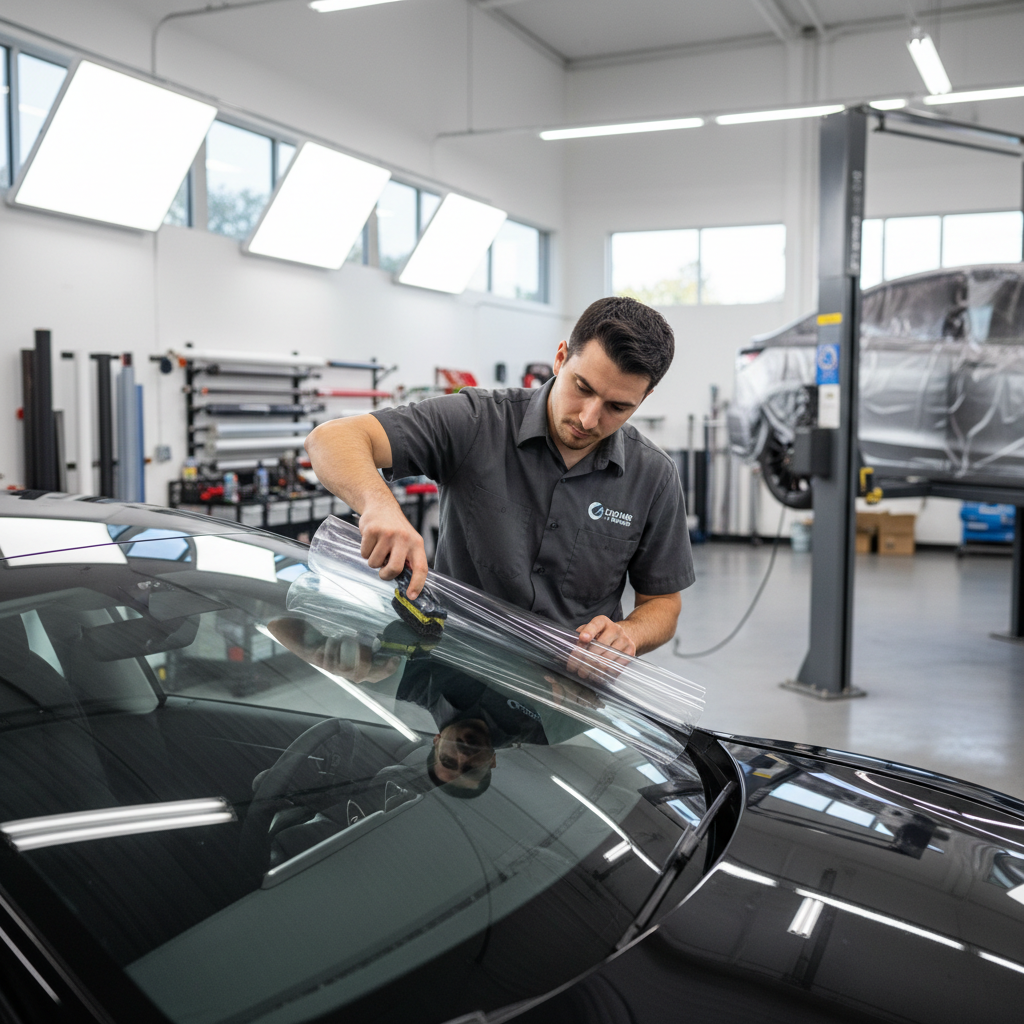
A common concern among new Tesla owners is whether adding tint to the glass roof will cause it to crack due to thermal stress. While it is true that low-quality films can cause heat build-up, 3M’s specialized ceramic films are engineered to safely dissipate energy. As a certified 3M Pro Shop Dealer, we follow strict installation protocols to ensure the glass remains within safe thermal tolerances.
Actually, the risk of glass damage is much higher from untreated thermal expansion-contraction cycles caused by the 40-degree temperature swings common in the Arizona desert. A professionally installed ceramic film acts as a stabilizer for the glass temperature.
Professional Installation vs. DIY
- Precision Cutting: We use computer-aided plotting to ensure a perfect fit for the complex curves of the Model X and Model Y glass.
- Contamination Control: Our clean-room environment prevents dust particles from being trapped under the film.
- Edge Trimming: Expert techniques ensure the film reaches the very edge of the glass without peeling.
The Multi-Layer Nano-Ceramic Advantage
The science of Tesla Ceramic Tint Phoenix has evolved significantly. Modern 3M films utilize hundreds of layers of nano-technology that are thinner than a Post-it Note but stronger than traditional polyester films. This allows for high-performance heat rejection without requiring the ‘limo tint’ look.
Specifically, the 3M Crystalline and Ceramic IR series offer ‘clear’ options that maintain the factory aesthetic while outperforming the darkest standard films on the market. This is ideal for drivers who want to keep their visibility high during night driving in Scottsdale or Paradise Valley.
- Night Visibility: High VLT options ensure safety without sacrificing heat rejection.
- Color Stability: 3M films are guaranteed never to change color or fade to a purple hue.
- Glare Reduction: Reduces eye strain during the blinding ‘Golden Hour’ on the I-10.
The Jomar Wraps Difference: 20 Years of Craftsmanship
Choosing the right film is only half the battle; the quality of the installation determines the longevity of the product. At Jomar Wraps, we don’t just apply film; we provide a comprehensive protection strategy. From Paint Protection Film (PPF) to custom color changes, we understand the high standards of luxury vehicle owners.
Moreover, our status as a 3M Preferred Installer means your investment is backed by one of the most robust warranties in the industry. Whether you are managing a commercial fleet or protecting your personal Model S Plaid, our team delivers perfection every time.
Why Phoenix Leaders Choose Us:
- Experience: Over two decades of experience in the Arizona market.
- Exclusivity: We exclusively use 3M products, the gold standard in automotive films.
- Versatility: Capability to handle everything from individual Teslas to massive fleet wraps.
Conclusion: Is Ceramic Tint Worth the Investment?
Ultimately, the decision to invest in ceramic window tint Phoenix comes down to value. While the upfront cost is higher than standard film, the ROI in terms of comfort, battery efficiency, and interior protection is undeniable. For a Tesla owner in Arizona, it is arguably the most important aftermarket modification you can make.
Ready to protect your Tesla from the Arizona heat? Contact Jomar Wraps today at 602-243-5000 or visit our shop to see the difference 3M Ceramic IR can make for your vehicle. Let our experts provide a custom quote tailored to your specific needs.
Frequently Asked Questions
Does ceramic tint actually improve Tesla battery range?
Yes, by rejecting up to 95% of infrared heat, ceramic tint significantly reduces the load on your Tesla’s HVAC system. In the 110°F+ Phoenix heat, the air conditioner is a major power draw; reducing its usage directly translates to better Watt-hour per mile (Wh/mi) efficiency and extended battery range.
Will tinting my Tesla glass roof cause it to crack?
When using high-quality 3M Ceramic films and professional installation, the risk is negligible. These films are engineered to manage solar energy effectively. Cracking issues are typically associated with low-quality metallic films or improper installation techniques that create uneven thermal stress on the glass edges.
How long does the ceramic tint installation process take?
A full Tesla ceramic tinting project, including the glass roof, side windows, and rear glass, typically takes 4 to 6 hours. We recommend leaving the vehicle with us for a full day to ensure the adhesive cures properly in our climate-controlled facility before being exposed to the Arizona sun.
Is ceramic tint legal in Arizona?
Arizona has specific laws regarding window tint darkness (VLT). Front side windows must allow more than 33% of light in. However, the glass roof and rear windows have more flexibility. We ensure all our installations comply with local Phoenix regulations while maximizing heat rejection for your comfort.