
Choosing the right ceramic window tint Phoenix solution is no longer a luxury; it is a critical survival strategy for any vehicle owner facing the brutal 115°F Arizona summer. At Jomar Wraps, a certified 3M Pro Shop Dealer with over 20 years of experience, we see the devastating effects of desert UV radiation on interiors and passenger comfort every single day.
The Science of Heat Rejection Film in the Sonoran Desert
Furthermore, understanding the difference between simple shade and true thermal management is essential for protecting your investment. While basic films rely on dark pigments to absorb light, high-performance heat rejection film utilizes advanced nanotechnology to reflect solar energy before it enters the cabin.
- Total Solar Energy Rejection (TSER): This metric measures a film’s ability to block UV, visible light, and infrared radiation.
- Infrared Energy Rejection (IRER): Specifically targets the heat you feel on your skin, often reaching up to 95% with 3M Ceramic IR.
- UV Protection: Both standard and ceramic films usually block 99% of UV rays, but ceramic adds the thermal layer necessary for Arizona.
Consequently, many Phoenix residents find that cheaper films provide a false sense of security while their dashboards continue to reach temperatures exceeding 180°F.
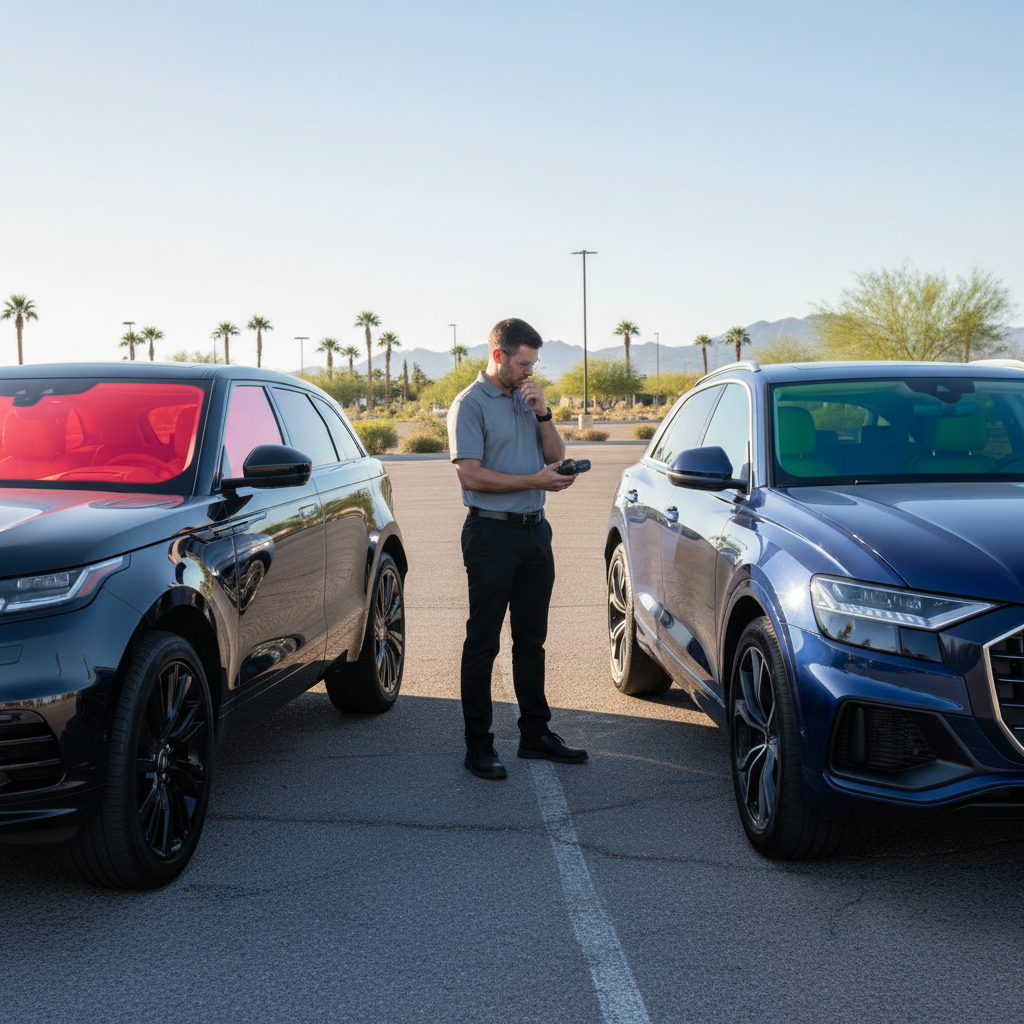
Comparing 3M Ceramic IR vs. Standard Dyed Films
Specifically, when we analyze the best window tint for Arizona heat, the 3M Ceramic IR Series consistently outperforms entry-level dyed or metallic films. Standard films often use metal particles that can interfere with 5G, GPS, and satellite radio signals, whereas ceramic is signal-enabling.
Performance Breakdown
- Heat Rejection: Ceramic films can reject up to 63% of total solar energy compared to roughly 30% for standard dyed films.
- Clarity and Safety: Ceramic technology allows for high heat rejection even in lighter shades, maintaining night vision clarity.
- Longevity: 3M Ceramic IR is designed not to turn purple or bubble, a common failure point for cheap films in the Phoenix sun.
| Feature | Standard Dyed Film | 3M Ceramic IR Series |
|---|---|---|
| Heat Rejection (TSER) | 25-35% | Up to 63% |
| Infrared Rejection | Low | Up to 95% |
Why Ceramic Window Tint Phoenix is Critical for EV Owners
Moreover, for Tesla and luxury EV owners, the thermal management provided by ceramic window tint Phoenix installers directly impacts vehicle range. By reducing the cabin temperature, the HVAC system doesn’t have to work as hard, preserving precious battery cycles during the peak of summer.
- AC Load Reduction: Lowering the interior temp by 20°F can reduce AC power consumption by up to 15%.
- Vegan Leather Preservation: Ceramic films prevent the “outgassing” and cracking of modern synthetic interiors common in high-end EVs.
- Digital Cockpit Protection: Modern oversized screens are sensitive to heat; ceramic film acts as a thermal shield for your electronics.
As noted by The U.S. Department of Energy, heat gain through windows is a primary driver of cooling costs, a fact that applies equally to your vehicle’s efficiency.
The Invisible Shield: Clear Ceramic Windshield Protection
Interestingly, the largest source of heat entry is often the windshield, which many owners leave untreated. Utilizing a clear nano-ceramic window film on the windshield provides massive heat rejection without compromising visibility or legal compliance.
- Skin Safety: Daily commuters in Phoenix are at high risk for left-arm sun damage; 3M films offer an SPF equivalent of 1000+.
- Glare Reduction: Advanced ceramic layers reduce the blinding desert sun glare, improving safety during sunset drives on the I-10.
- The “Seatbelt Burn” Factor: High IR rejection means metal buckles and leather surfaces stay touchable even after hours in a parking lot.
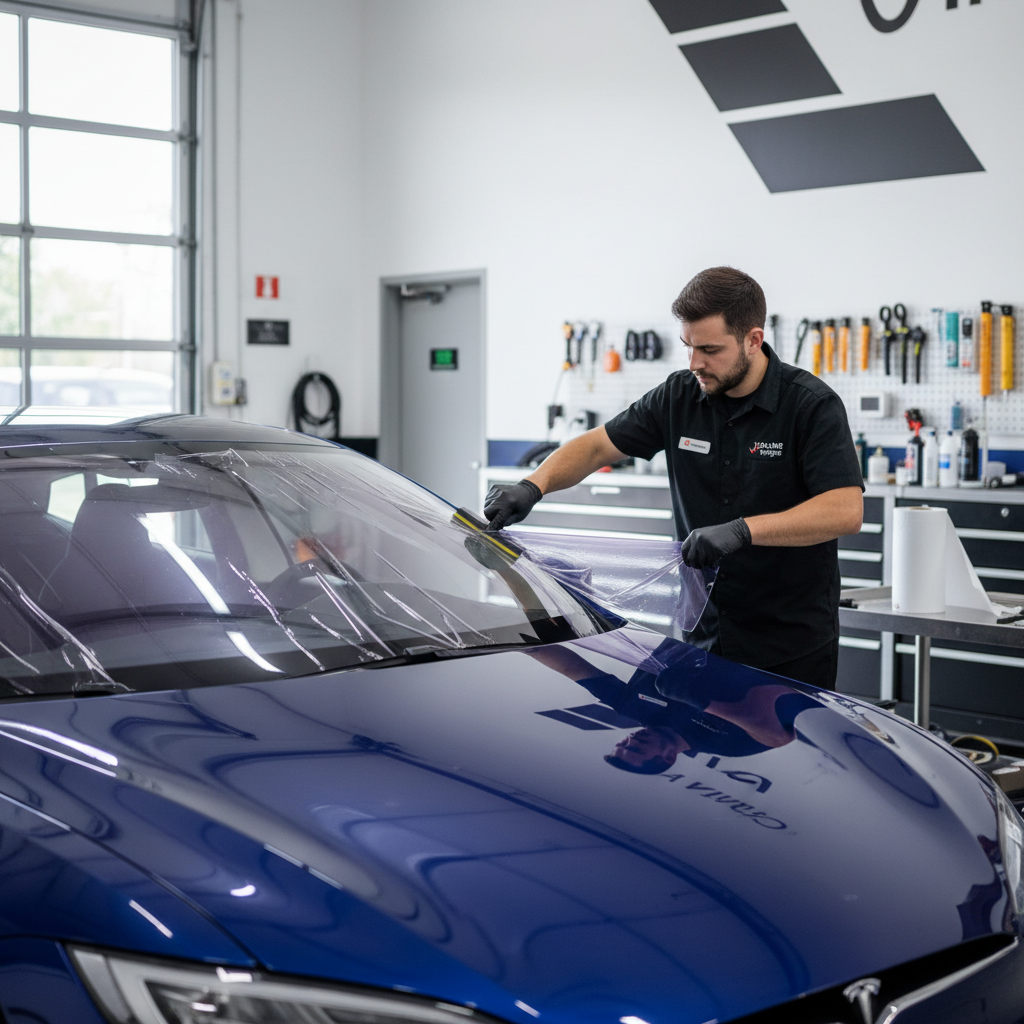
The ROI of Premium Heat Rejection Film
Additionally, sophisticated owners look at the long-term ROI rather than the initial sticker price. Investing in the best window tint for Arizona heat pays for itself through interior preservation and fuel/energy savings over a 5-year residency.
Cost-Per-Degree Analysis
- Standard Film: $200-$300 initial cost, but requires replacement every 2-3 years due to Phoenix UV degradation.
- 3M Ceramic IR: $500-$800 initial cost, backed by a 3M lifetime warranty and superior heat rejection.
- Resale Value: Documentation of 3M Pro Shop installation adds tangible value to luxury and performance vehicle appraisals.
You can explore our full range of 3M window tinting services to see which package fits your specific fleet or personal vehicle needs.
The Tech-Friendly Advantage of Nano-Ceramic Window Film
Finally, as vehicles become more connected, the material of your tint matters more than ever. Traditional metallic films create a “Faraday cage” effect, degrading 5G connectivity and GPS accuracy, which is a non-starter for modern marketing leaders and fleet managers.
- Connectivity: Ceramic films are non-conductive and non-metallic, ensuring your mobile office stays online.
- Aesthetics: Achieve a sophisticated, non-reflective look that complements the factory glass of high-end German and American vehicles.
- Expert Installation: At Jomar Wraps, our 3M Preferred Installers ensure a micro-edge finish that looks like factory-installed privacy glass.
For those managing commercial assets, our commercial fleet graphics can be paired with ceramic tint to protect both your drivers and your branding investments.
Frequently Asked Questions
Is ceramic window tint Phoenix worth the extra cost compared to carbon?
Absolutely. While carbon film is better than dyed, only ceramic window tint Phoenix offers the high Infrared (IR) rejection required for 110°F+ days. In the Arizona desert, carbon films often fail to prevent the “oven effect” inside parked cars, whereas 3M Ceramic IR can reject up to 95% of heat-producing infrared rays.
Will ceramic tint interfere with my Tesla’s Autopilot or GPS?
No, the 3M Ceramic IR series is specifically designed to be signal-enabling. Unlike older metallic films that can disrupt 5G, Bluetooth, and GPS signals, nano-ceramic window film is non-metallic. This ensures your vehicle’s sophisticated sensors and connectivity suites operate at peak performance without interference.
How long does 3M Ceramic IR window tint last in the Arizona sun?
Because Jomar Wraps is a 3M Pro Shop Dealer, your installation comes with a limited lifetime warranty. 3M’s advanced polyester technology is engineered to resist the bubbling, peeling, and purple discoloration commonly seen with inferior products exposed to high UV indexes like those found in Phoenix and Scottsdale.
Can I tint my windshield legally in Arizona for heat protection?
Arizona law allows for non-reflective tint above the manufacturer’s AS-1 line. However, many owners opt for a clear ceramic film (like 3M Crystalline or IR 70/80) across the entire windshield. These films are virtually invisible but provide significant heat rejection, blocking the primary entry point for solar energy while remaining within safety standards.
Does window tint help extend the range of my Electric Vehicle (EV)?
Yes, significantly. By utilizing high-quality heat rejection film, you reduce the thermal load on the vehicle’s cabin. This allows the climate control system to maintain temperatures using less battery power. In extreme Phoenix heat, this can result in a measurable increase in available range during summer months.